Irish Horse Racing Betting from the UK: Tracks, Tips and Where to Watch
 Available in US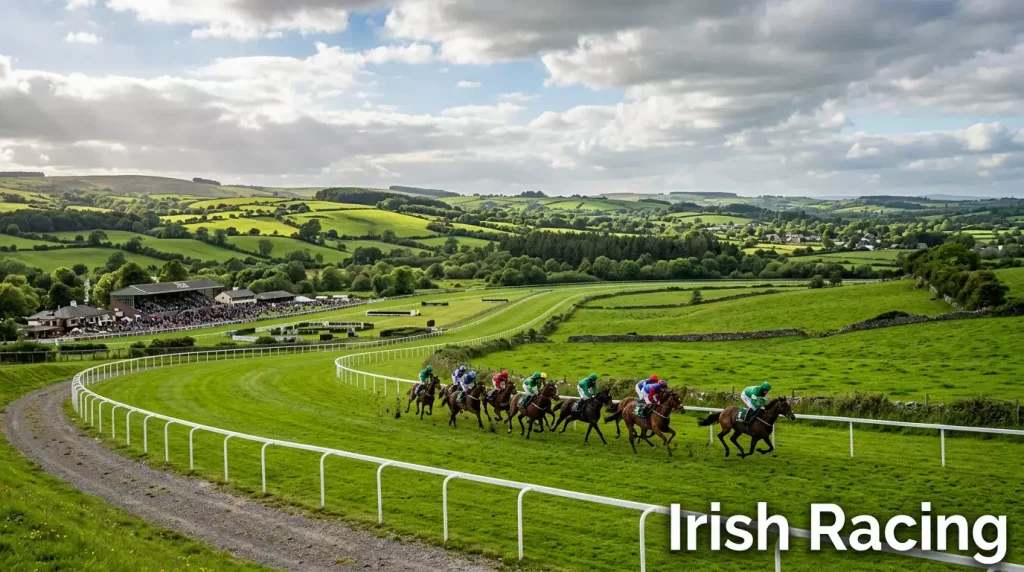
Across the Irish Sea, More Racing to Bet On
Irish horse racing is not an annex to the British calendar — it is a parallel ecosystem with its own tracks, its own form lines, its own going conditions, and a depth of talent that routinely embarrasses the home team at Cheltenham, Aintree, and Royal Ascot. UK-licensed bookmakers stream Irish meetings daily, cover them with full betting markets, and apply the same promotions — BOG, extra places, acca bonuses — that they offer on domestic fixtures. For UK punters, Irish racing is not foreign territory. It is an extension of the programme, available through the same apps and the same accounts, with opportunities that the UK calendar alone cannot provide.
The reason to pay attention to Irish racing is simple: it produces many of the best horses that will eventually compete on British soil. Understanding Irish form, knowing the key tracks, and following the dominant training operations gives you an analytical edge when those horses cross the Irish Sea — and it gives you access to betting markets that are often less sharp than their UK equivalents, precisely because fewer British punters follow them closely.
The Key Irish Tracks: Where the Action Happens
Leopardstown, on the southern edge of Dublin, is arguably the most important racecourse in Ireland for betting purposes. Its Christmas meeting — three days of top-class National Hunt racing between St Stephen’s Day and 29 December — produces the form lines that shape the Cheltenham ante-post market more than any other fixture. The Dublin Racing Festival in February, also at Leopardstown, is the final major trial meeting before Cheltenham and attracts the strongest Irish-trained horses in each division. UK racecourse attendance surpassed five million in 2025, according to the BHA’s annual report, and Irish fixtures — especially those streamed by UK bookmakers — add to the total racing audience that UK punters engage with.
The Curragh, in County Kildare, is the headquarters of Irish flat racing. It hosts all five Irish Classics and stages regular Group 1 fixtures throughout the summer. The track’s wide, galloping right-handed layout suits different types of horse from Leopardstown’s undulating left-handed course, and form from one does not always translate directly to the other. For UK punters betting on flat racing, the Curragh trials are the key indicator of which horses Aidan O’Brien, Dermot Weld, and the emerging generation of Irish flat trainers will send across the water for Royal Ascot and the autumn championship races at Ascot and Newmarket.
Punchestown hosts the season-ending National Hunt Festival in late April, which serves as a coda to the entire jumps season. Galway’s summer festival is a seven-day meeting that mixes high-quality racing with enormous betting volume — the Galway Hurdle and the Galway Plate are two of the most wagered-on handicaps in Irish racing. Fairyhouse, home of the Irish Grand National on Easter Monday, rounds out the major venues. Each track has its own character, and punters who invest time in learning the course profiles find that Irish racing offers a layer of depth that the UK programme alone cannot provide.
Irish Form, Cross-Channel Trainers and What to Watch For
Irish horse racing is dominated by a smaller number of powerful training operations than British racing. In National Hunt, Willie Mullins and Gordon Elliott between them account for a disproportionate share of all wins, and their dominance extends to British festivals — Mullins alone has won more races at Cheltenham than most entire countries. In flat racing, Aidan O’Brien’s Ballydoyle operation produces Classic winners with a consistency that has no parallel in modern European racing. Following the entries, declarations, and jockey bookings from these yards is not optional for anyone betting seriously on races where Irish-trained runners compete.
Cross-channel form analysis requires adjustment. The going in Ireland tends to ride softer than in Britain, particularly during the National Hunt season — Irish ground descriptions of “Yielding” and “Soft” correspond roughly to “Soft” and “Heavy” on the British scale. A horse that handles Irish Soft may find British Soft entirely comfortable, but a horse whose form is all on Irish Good may struggle on British Soft. British racing distributed a record £194.7 million in total prize money in 2025, compared to a lower but growing prize fund in Ireland — and that differential motivates the best Irish trainers to target British races, creating a constant flow of high-quality raiders whose form needs to be read in context.
Field sizes in Irish racing are generally smaller than in Britain, particularly on the flat, which makes Irish form easier to assess in some respects — fewer runners means fewer variables. But the smaller pool of horses means the same runners meet each other repeatedly, creating form cycles that can be misleading if taken at face value. A horse that has beaten the same rival three times in Ireland may face a completely different level of opposition when it crosses to Britain. The skill is in calibrating Irish form against the British standard, and the Cheltenham Festival provides the annual benchmark for exactly that comparison.
Where to Watch Irish Racing from the UK
Most major UK bookmakers stream Irish meetings through their apps and websites, using the same access conditions as for UK racing — a funded account or a recently placed bet, depending on the operator. bet365 covers the broadest range of Irish fixtures, including weekday meetings that other operators may not stream. Sky Bet, Coral, Paddy Power (unsurprisingly, given its Irish roots), and Betfair all stream Irish meetings regularly. William Hill and Ladbrokes also provide coverage of the main Irish meetings, though the depth of coverage on quieter midweek cards varies.
Racing TV broadcasts the majority of Irish meetings live, including all the major festivals, as part of its standard subscription. For UK punters who follow Irish racing regularly, a Racing TV subscription provides the most comprehensive coverage — every meeting, with expert analysis and paddock coverage that the bookmaker streams do not include. Sky Sports Racing covers selected Irish meetings alongside its UK programme. ITV Racing does not cover Irish meetings as part of its regular schedule, though Cheltenham and other cross-channel events feature Irish form prominently in the previews.
Henry Beesley of Fitzdares has described the Cheltenham Festival as the racing equivalent of the Olympics, where British and Irish horses meet in championship conditions. That cross-channel rivalry is the most visible expression of a relationship between the two racing nations that plays out every day of the year, at every level of the sport. The annual battle between Irish and British trainers at Cheltenham is the centrepiece, but the real opportunity for UK punters lies in the less publicised Irish meetings — the weekday cards at Leopardstown, the summer fixtures at Galway, the autumn preparation races at Naas and Navan — where the same trainers trial the horses that will eventually cross the water. Following those meetings, learning the form, and understanding the trainers’ patterns gives you an informational advantage that pays off when those horses appear in UK ante-post markets at prices that have not yet absorbed the full picture.
Irish Horse Racing Betting from the UK — More on this topic at horse racing sportsbook.
See also Horse Racing Betting Glossary.
